What Research Tells Us About Hunters & Target Shooters
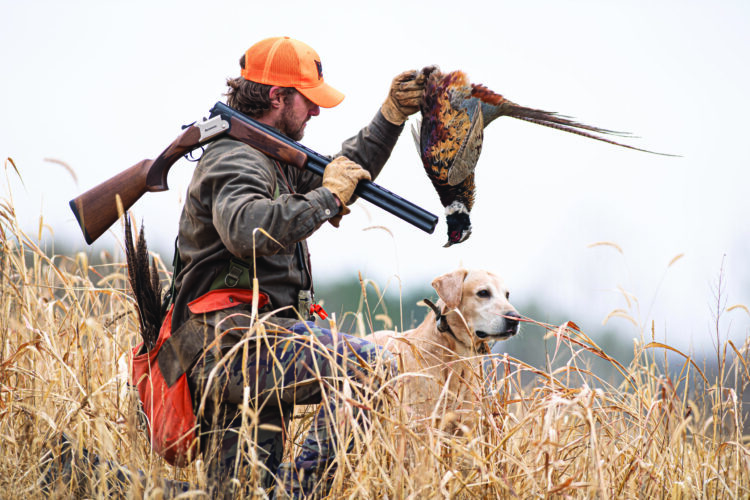
Image: O.F. Mossberg & Sons
“Know your customer” is a pillar of many sales and marketing strategies. The value proposition is clear: If you know your customers and what drives them, you can better communicate how your goods may fit their needs. However, when it comes to figuring out who your customers are and what motivates them, things are less clear.
For years, outdoor marketers have referred to five phases that people evolve through in their lifetimes as hunters. However, these five phases were identified based on a single study published nearly 40 years ago that focused primarily on male duck hunters in a single state.
Recently, Southwick Associates conducted a study for the Western Association of Fish and Wildlife Agencies (WAFWA), with U.S. Fish & Wildlife Service funding from excise taxes paid. The study sought to gain an understanding of all hunters and target shooters and what motivates them to participate in their chosen sport.
To accomplish this, more than 4,200 U.S. hunters and target shooters across the U.S. were surveyed regarding their current and previous motivations for hunting and/or target shooting. Through advanced statistical analysis, hunters and shooters were grouped into distinct segments, referred to as “personas,” based on their shared motivations to hunt and/or shoot.
While each individual is motivated by a unique set of factors, viewing hunters and target shooters through the lens of personas helps to make the behaviors of each group easier to understand. This research identified four key personas existing among U.S. hunters, and six key personas prevalent among U.S. target shooters that are described below.
The Four Hunter Personas
1. Provider (25%)
Obtaining wild meat is the primary motivation, while sharing the game meat is also important for the Provider. This hunter persona is less interested in the social aspects of hunting, harvesting the largest or select game animals or using hunting to escape the daily grind. However, half still place a high value on enjoying nature and the outdoors as part of the ideal day afield. Compared to other personas, the Provider is most likely to pursue big game and least likely to pursue upland game birds.
2. Tranquil Hunter (27%)
The Tranquil Hunter uses hunting to relax, escape and experience the outdoors. Social reasons rate lower than any other hunter persona. Their ideal day in the field is relaxing and seeing wildlife in general. They report the highest rate of not buying a hunting license in consecutive years, so efforts to retain this persona are essential.
3. Social Hunter (19%)
Hunting is a way for the Social Hunter to spend time with friends and family, to be part of a family or community tradition. Harvesting game is of lesser interest. They are the most interested in teaching others to hunt.
4. Enthusiastic Hunter (29%)
The Enthusiastic Hunter scores highest across many hunting motivations, including seeking new achievements, sharing their hunting experiences, mentoring and taking mature/select animals. Although they rate the lowest in terms of social motivations and securing their own food, they are eager to establish themselves in the hunting community. They’re more likely to rate themselves as an expert hunter despite being the youngest persona.
The Six Target Shooter Personas
1. Fundamental Defender (21%)
Having the ability to defend themselves and others close to them motivates the Fundamental Defender. They want to be skilled and competent, but not necessarily expert. “Empowerment” resonates with them, while the social and recreational aspects of shooting have below-average appeal. Many members never grow out of this introductory persona; most see themselves in a learning role and have higher-than-average interest in face-to-face classes and instructional videos.
2. Skilled Guardian (21%)
The primary motivation for the Skilled Guardian is to be prepared to defend themselves and others. Unlike the Fundamental Defender, they seek to continually improve their accuracy and proficiency. They report above-average experience and skills and are more likely to be asked for shooting advice than to seek it.
3. Challenge Chaser (19%)
Besides being one of the most experienced shooters, the Challenge Chaser wants to enjoy their personal time, often outdoors, through the challenge of target shooting. They have the lowest level of interest in the ability to defend themselves or others with a firearm. This is the top persona for shotgun sports and traditional rifles.
4. Sociable Target Shooter (15%)
Sociable Target Shooters rank target shooting’s importance in their lives lower than all other personas, but it is a way to spend time with others. Accuracy, precision and the number of rounds fired are less important than the time spent with others when target shooting. Social Target Shooters prefer traditional rifles more than other personas and are the least likely to use modern sporting rifles.
5. Skills Seeker (13%)
For the Skills Seeker, target shooting is all about acquiring a new skill. Personal defense and the thrill of shooting rate very low. They have the least experience, with 85% shooting 10 years or less. Nearly two-thirds say they are more likely to ask for advice than to share with others. They are much less likely to see the cost of ammunition as a barrier.
6. Fun Seeker (11%)
For the Fun Seeker, target shooting is thrilling and a way to enjoy themselves. They shoot for recreation and enjoyment, not to develop new skills or for defensive purposes. A Fun Seeker is more interested in trying new shooting styles and finding new places to shoot compared to other personas.
Shifting Motivations
In addition to defining these key hunter and target shooter segments, the research yielded another critical insight — people’s motivations change over time, and they do not necessarily evolve in a linear or predictable way.
As in many other areas of life, the paths people take are varied and their underlying motivations for choosing any given path, or “segment” in our case, are complex. Target shooters may gain, lose and trade motivations over time, and in some cases, what motivates them to shoot later in life can be completely different than what motivated them to start.
Understanding these key personas and what drives them to participate is key to knowing your customer, and smart marketing recognizes people’s motivations to hunt and target shoot vary.
If you’re interested in viewing these segments in more depth, including their demographic make-up, top five motivations, participation rates and more, a summary brochure and technical report are available at www.southwickassociates.com/hunt-shoot-personas-24.