The Visit Isn’t the First Impression
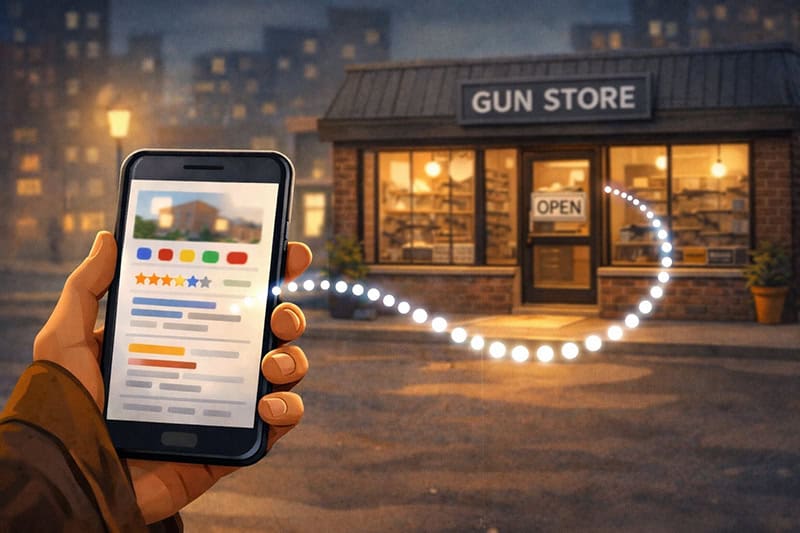
Before someone walks into your store, they usually make a few decisions first.
Are you open? Do you carry what they need? Is this place worth the trip?
Those questions used to get answered at the door. Now they get answered on a quick internet search.
Someone pulls up your business on their phone, usually through Google, scrolls through your listing, and makes a decision faster than most people realize. If your listing looks solid, they click into your website. If they are still interested, they check your social to get a feel for what your store is actually like.
Most customers are not comparing every option anymore. They are quickly ruling places out.
By the time they decide to drive over, they have already formed a pretty clear opinion about whether your store feels like the right place to go.
Where That Opinion Starts
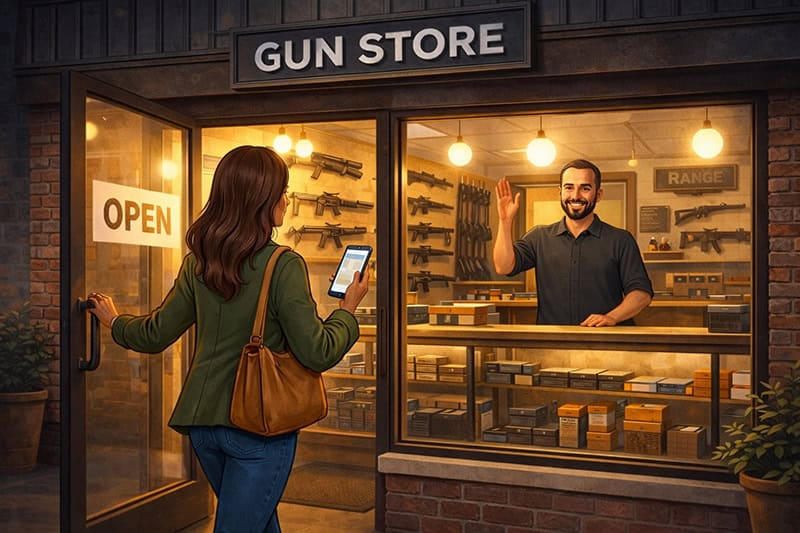
For most people, it starts right on your Google listing.
If your hours do not match what is actually happening, if your phone number does not connect, or if basic details are missing, most people do not pause to figure it out. They move on.
Photos carry a lot of weight here. A few clear, well-lit images of your store, your counters, or your range give people something real to look at. Without that, they are left guessing what your store is like, and most people are not willing to guess when they have other options.
Reviews factor in as well. Not just the rating, but how recent they are and whether anyone responds. A page with recent activity feels like a place that is open, running, and paying attention. One that has not been updated in a while can feel uncertain, even if the business itself is steady.
What They Look For Next
If your Google listing gives them enough confidence, most people click into your website.
At that point, they are trying to answer a few simple questions. What do you carry? How do you operate? What do they need to do next?
If they can find those answers quickly, they keep going. If your site is hard to navigate, slow to load, or not built for a phone, they usually do not stick around. They leave and check another store.
If something takes effort to figure out, most people do not figure it out anymore.
Showing some version of your inventory helps here, even if it is not complete. Customers understand that not everything can be listed online. Still, seeing brands, product types, or examples helps them get a sense of what you carry. That makes the decision to come in feel more concrete.
A Quick Check on Social
After your website, many people take a quick look at your social pages. Not for entertainment, just to get a feel for your store.
They are looking for simple signals. Does the store look active? Are there recent posts? Does the space look clean and organized? Does it seem like a place they would feel comfortable walking into?
If the last post is months or years old, people notice. It does not mean the business is inactive, but it raises questions. Most people do not spend time trying to answer those questions.
A few recent posts, such as a new shipment, a quick product comparison, or a class in progress, give them what they need. It shows that the store is active and current.
What People Pick Up Without Realizing It
Across your Google listing, your website, and your social pages, people are taking in visual cues the entire time.
The way your store looks in photos, the way your website is laid out, and the overall presentation all shape how your business comes across. Clean, well-lit, and organized tends to feel professional and dependable. Dark, cluttered, or hard-to-follow visuals can create hesitation, even if everything behind the counter is solid.
Sometimes the simplest improvement is better photos. Not perfect photos, just clearer ones.
A well-lit photo of your counter, your range, or your displays gives people a much better sense of your store than a dark or poorly framed image. Showing the areas customers will actually interact with helps them picture the experience before they arrive.
For many stores, this can be as simple as taking a few intentional photos or bringing in a local photographer for a short shoot. Those same photos can be used on your website, your Google listing, and your social pages.
What Helps People Follow Through
Customers are busy and more deliberate about where they spend their time. When they can answer a few key questions before they leave the house, they are far more likely to follow through.
That might mean browsing inventory, checking availability, or understanding how the process works before they arrive. Options like reserving items ahead of time or signing up for classes online make the visit feel more worthwhile.
Clear hours, easy contact options, and straightforward information all play a role. These are the kinds of details people notice without thinking about it, and they make the decision to come in easier.
What This Adds Up To
What happens inside your store still matters. That is where relationships are built and where people decide to come back.
But by the time someone gets there, a lot of the decision has already been made.
If your business looks clear, current, and easy to understand online, people walk in with confidence. If it looks incomplete or hard to figure out, they hesitate or choose somewhere else.
You do not need to overhaul everything to improve this. A few updates, a little consistency, and some attention to how your business shows up online can make a noticeable difference.
Get more Dealer Advantage every week!
By submitting this form, you are consenting to receive marketing emails from: . You can revoke your consent to receive emails at any time by using the SafeUnsubscribe® link, found at the bottom of every email. Emails are serviced by Constant Contact