Suppressor Sales Saw New Year Surge
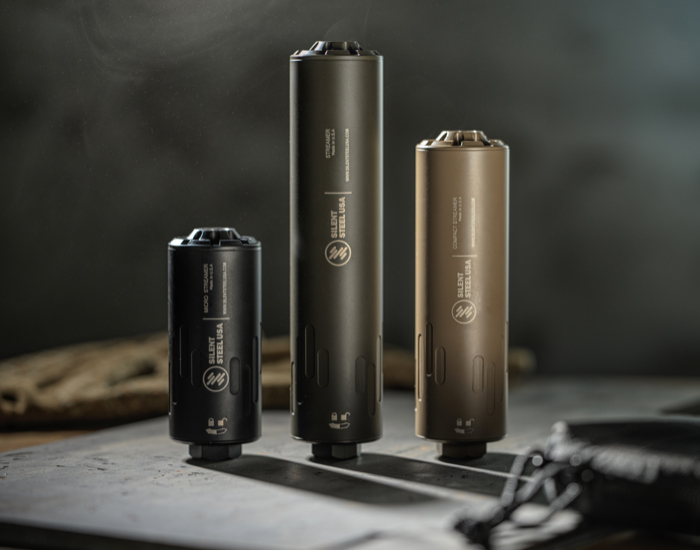
The Streamer series from Silent Steel USA. Image courtesy Silent Steel USA.
“Silence is golden,” and at the shooting range, it can be worth its weight in gold, almost literally! Suppressors – what too many movies, TV shows, and video games call “silencers” – range in price from a few hundred dollars to more than $1,500. However, until January 1 of this year, the total “out-the-door” cost also included an additional $200 National Firearms Act (NFA) tax stamp.
While lawmakers’ efforts to have suppressors removed from the NFA list have fallen short in recent years, the “One Big, Beautiful Bill” signed into law last summer by President Donald Trump included a provision that ended the tax on certain firearm-related items. That included firearm suppressors, short-barrel rifles (SBRs), and short-barrel shotguns (SBSs).
Although the tax is no more, suppressors do remain regulated under the NFA of 1934, requiring the necessary background checks. Unfortunately for residents of California, Delaware, Hawaii, Illinois, Massachusetts, New Jersey, New York, Rhode Island, and Washington, D.C., suppressors remain banned.
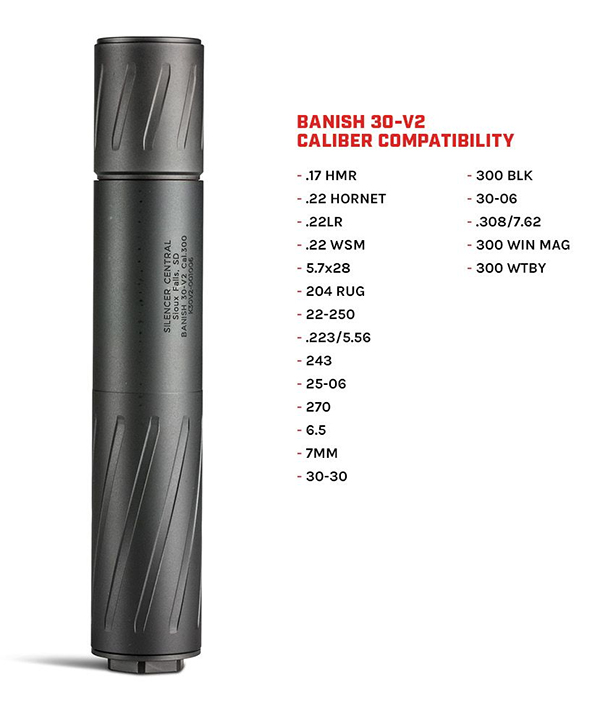
Silencer Central's Banish offers plenty of caliber versatility. Image courtesy Silencer Central.
A Muffled Bang to Start the New Year
According to data from the Bureau of Alcohol, Tobacco, Firearms, and Explosives (ATF), and reported by the National Shooting Sports Foundation (NSSF), sales of suppressors saw an unprecedented surge in e-Forms submissions on New Year’s Day. The total number of e-Forms filed with the ATF on January 1, 2026, neared 150,000, up from the typical 2,500 received daily.
It is important to note that those submissions also included SBRs and SBSs, but the NSSF noted that suppressor registrations had already risen by more than 265% over the past five years. As the firearms industry trade group further reported, many suppressor companies were covering the tax for buyers in the final months of 2025.
Outdoor Wire also reported that 2026 could see a surge in suppressor sales, with potential sales exceeding 1 million units. The year started with a “muffled bang,” and some retailers expect it to continue, but nothing like on New Year’s Day.
“We sold a ton of suppressors and held them for people leading up to January 1,” said Natalie of The Island Armory of Warren, Michigan. She told Shooting Industry that suppressor sales have been well above average, yet they’re not selling out as some may have predicted.
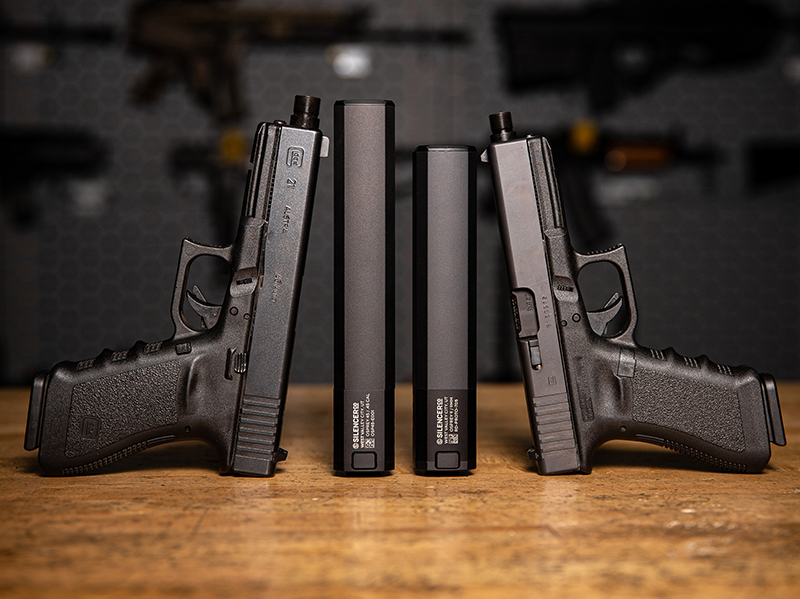
The Osprey 9 2.0 and Osprey 45 2.0 from SilencerCo. Image courtesy SilencerCo.
Eager Buyers, Not a Mad Rush
Sales for 2026 and beyond shouldn’t be judged just by what was seen on January 1. There may have been a post-holiday rush, but sales have already leveled off. Removing the $200 tax stamp lowered costs but did not reduce the barrier to entry.
“While suppressor sales have been strong since the beginning of the year, I don’t feel it’s been the ‘mad rush’ some folks were predicting,” explained Justin Landis, owner of JJ Gun Supply in Brookville, Ohio.
“It seems some manufacturers trying to break into the suppressor game had banked on the inventory of popular brands disappearing overnight, which didn’t happen,” Landis said. “We still have a strong backstock, and have a good distribution chain keeping us in product with regular shipments.”
Landis added that he anticipates sales to slow slightly leading up to March and April, before they pick up briefly.
“Tax returns will likely see an increase in sales,” added Landis, who noted that summer sales always slow in the industry, and he didn’t see any reason for this year to be different.
“The fall will likely see a bump in hunting cans, as it has for several years,” said Landis.
The Waiting Game
For high-end consumers, the removal of the $200 transfer fee may have mattered less than the time it took to receive the item. The introduction of e-Forms accelerated a process that used to drag on for months, sometimes up to a year!
Ironically, removing the fee actually slowed the background check process.
“At the beginning of the year, we were seeing submissions from the first week approved in two to three days,” said Landis. “As more submissions were plugged into the system, times understandably slowed.”
Landis said that at press time, he was seeing Form 4 approvals consistently in the 12-14 day period, and he anticipated the timeline could stretch to three to four weeks, especially with tax season approaching.
The situation was much the same in Michigan as in Ohio.
“We have seen approvals in as little as 24 hrs to two weeks for individuals and two weeks average for trusts,” said Natalie at The Island Armory. “It’s the government, so there really is no rhyme or reason to it, of course.”
The Suppressor Sales Outlook
The removal of suppressors, SBRs, and SBSs is likely to strengthen the NFA market; however, retailers expect sales to be as concentrated as in January. Still, adding more suppressors at the range could drive more sales. It is a product that many aren’t sold on, at least until they see and hear it in action.
“There is nothing that sells suppressors better than more suppressors in circulation. We are seeing many more clients aiming to dedicate suppressors to specific firearms,” said Landis. “With the removal of the $200 transfer tax, I believe the market for more budget-friendly options will open up.”
Landis noted that many rimfire suppressors cost between $200 and $500. Yet, very few people were buying the lower-priced rimfire cans before the law changed.
“If they were already going to be paying an additional $200, it was common for the buyer to purchase a pricier option to make sure they were ‘getting their money’s worth’ on the stamp,” said Landis. “With the removal of that, we’re already seeing more sales in the lower-priced lines.”
That will likely create an opportunity for new brands to fill that niche, and some larger, established brands may opt to offer more entry-level options to capture that segment of the market.
“After 2026, I do expect suppressor sales to level out. I believe the NFA game will become commonplace throughout 2026, and follow the same trends as Title 1 firearms as time goes on,” Landis continued.
Natalie further commented that the shop expects to see better suppressor sales this year than in 2025, especially in some calibers, like .22 LR.
“It has always been a tough pill to swallow when the suppressor costs as much as the stamp,” Natalie continued. “Overall, the industry was down last year a ton, and unless something drastically changes, it feels like it’s going to stay that way this year.”
For more information on featured suppressors visit: Silencer Central, SilencerCo and Silent Steel USA.
Claim Your Advantage Every Week!
By submitting this form, you are consenting to receive marketing emails from: . You can revoke your consent to receive emails at any time by using the SafeUnsubscribe® link, found at the bottom of every email. Emails are serviced by Constant Contact