Continuing The Dialogue:
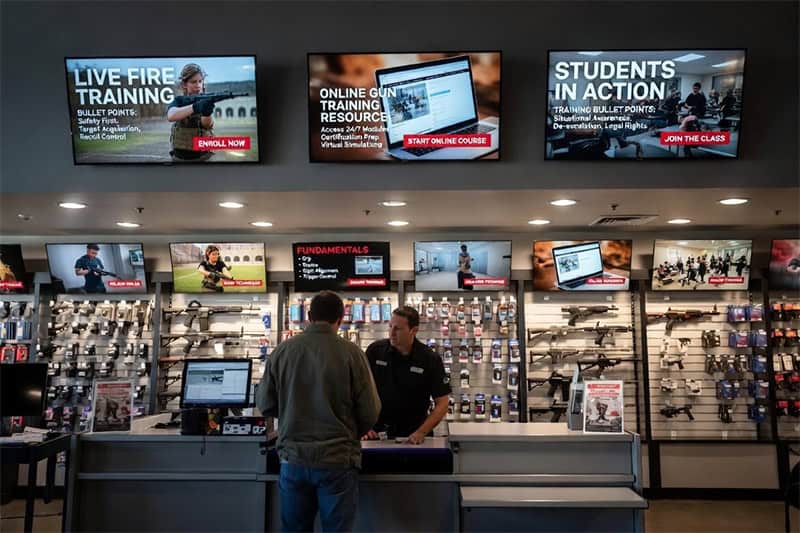
Storefront vs. Home-Based FFLs

Image: eireenz // Adobe Stock
A “Basement Bandit” On The Front Lines
Editor’s Note: The home-based/pariah/basement bandit vs. storefront dealer debate has dominated this section over the past year and a half — and continues to generate feedback from readers. Here, we give SI Contributing Editor Doug VanderWoude an opportunity to respond to one dealer’s query.
In the January issue I read Doug VanderWoude’s comments to both dealers (Letters, Jan. 2023). It’s unfortunate I have to agree with anybody this late in life, but Mr. VanderWoude is right. (I’m 71, retired after building high rises, bridges and ships for 44 years.)
Mr. VanderWoude is 100% correct: The entire shooting sports industry is screwed up.
I’m what Mr. VanderWoude calls a “basement bandit.” I only stock high-end guns, leaving the junk to the big gun shops. I volunteer my time and construction skills at several local ranges. I teach gun safety and marksmanship.
The brick-and-mortar gun shops around me refuse to accept guns purchased online for shipment to an FFL, so I do it for a paperwork fee. My feeling is if you refuse to help who should be your customer, I will.
During legislative sessions, I’m in the Washington State Capitol. This year alone, I’ve spent more than I made selling guns on gas and parking. Over the last 25 years, the cost has run into thousands of dollars.
Two or even three times a week, I’m up at 4 a.m., get to the capitol building at 5 a.m., wait in line two hours to get inside and then wait another two hours to stand in line at a hearing room until it opens at 9 a.m. It’s a lot of effort for a chance to speak at a committee meeting on some obnoxious bill for two minutes.
It’s funny: at the state capitol, I’ve only ever seen one brick-and-mortar gun shop owner even try to help us make a difference. In 25 years, I’ve never seen someone sent from Cabela’s, Bass Pro Shops or Sportsman’s Warehouse.
The only question I have is when Mr. VanderWoude’s state legislature is in session and bad bills are before committees, where is he? Sleeping in is my guess …
— Mike Silvers, Owner
Silvers & Co.
Federal Way, Wash.
Mike,
As for my comments regarding “basement bandits” such as you define yourself let me speak to a bigger picture you may not have considered.
Firstly, without a robust and ever-present network of brick-and-mortar firearm shops across the country there would not be enough business being transacted in the firearm space to keep the manufacturers in business. One brick-and-mortar “mom and pop” shop will sell more units of firearms and accessories than dozens or even hundreds home-based businesses.
To be able to conduct this volume of business it takes substantial amounts of cash, put at great risk, to open and maintain these businesses and with that risk should come fair rewards for working that hard and taking those risks.
The problem is the margins on firearms are already razor thin. For a brick-and-mortar retailer in today’s climate — slower sales driven by low price, often set by dealers with little to no overhead such as yourself — the costs of doing business are more than the profits the firearm generates.
At the end of the day, you owe the success of your hobby to others who are taking a far greater risk than you are, day to day, doing the hard work to keep this industry alive. With that, I would hope you show them a little more respect and admit your hobby actually does more harm than good in the long run.
While I greatly appreciate your efforts in legislative matters there are many ways to do so, one being the millions of dollars that brick and mortar gun shops spend on lobbyists and other advocacy through groups such as the NSSF that work hard every day and represent the industry so that gun shop owners can stay in their business and sell the goods to allow people to participate in the Second Amendment… moneys that add up to more than kitchen table dealers contribute annually many times over.
The sooner manufacturers and distributors start treating legitimate retailers better than anyone with a pulse the stronger the industry will be.
Best regards,
Doug VanderWoude
A Foot In Two Camps
I’m following the back-and-forth between home-based FFLs and brick-and-mortar dealers closely with great interest. On the home-based side of this, us readers aren’t getting complete disclosure.
First, I must state my business — TRL Firearms & Gunsmithing — is living in both worlds. Our initial application 11 years ago specified we had to have a storefront to get the FFL.
We’re fortunate to have historic zoning that allows for a home-based business. Yet we still had to submit a local business license/photo of storefront to suppliers to qualify for dealer accounts.
The shop is indeed on the side of a historic (read: large) house. I can’t help but think when other home-based FFLs complain the wholesalers “won’t sell them guns,” they actually mean the wholesalers won’t give them credit like a net 30 or whatever. We also don’t know from these letters what impression a photo of the home might present.
Hopefully future comments might have more clarity in these areas. Our own experience has been things take time to build up. Also, getting your product (any of it) on credit is a big mistake we’ve never made.
Good luck to all small dealers trying to survive in the “transfer world” where the internet dealers never really touch the guns!
— Laura Rothermund, Co-Owner
TRL Firearms & Gunsmithing
Salisbury, Md.