What Actually Happened With The NFA
No, The NFA Isn't Dead
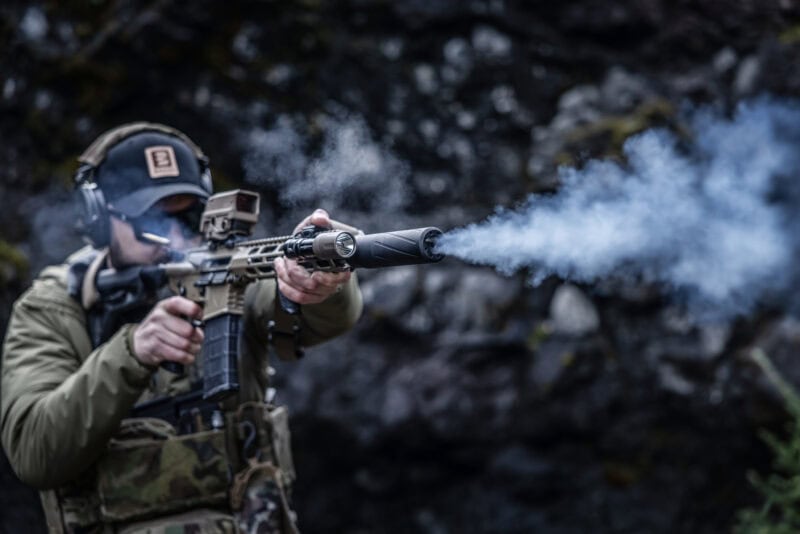
Is this the future for most shooters in the U.S.? Despite some of the breathless headlines regarding
a recent decision by a federal judge, suppressors and other NFA items are not suddenly unregulated.
The ruling is a good start but read the story to understand the important caveats of the decision.
Photo: Silencer Central
** Reprinted from our sister publication gunsmagazine.com **
If you’ve spent any time on social media or the gun websites in the past week, you could be forgiven for thinking the National Firearms Act (NFA) just died.
It didn’t.
Depending on which headline you read, a federal judge either “struck down the NFA,” “ended the NFA,” “killed the gun registry,” or made suppressors, short-barreled rifles and short-barreled shotguns essentially as easy to acquire as any other firearm.
There is a lot of enthusiasm surrounding the decision, and there should be. However, there is a huge stretch of open water between saying a federal judge has struck down important portions of the NFA’s regulatory structure and saying the NFA is dead. The latter makes for a better headline, but the former is much closer to what actually happened.
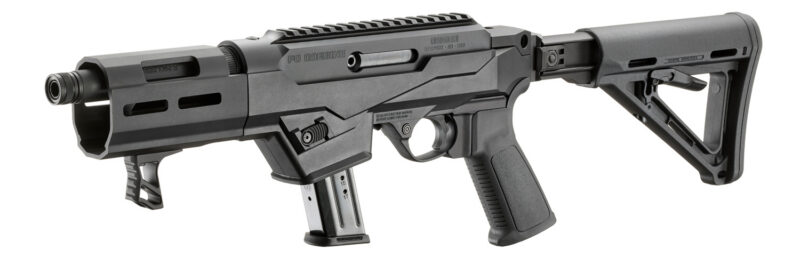
The latest court ruling also covers short-barreled rifles (SBRs), such as this Ruger PC Carbine SBR
in 9mm. It also raises an interesting question about the future of “pistol braces.” If the NFA's SBR
registration requirement ultimately goes away, will we eventually have to stop calling them “braces”
and start calling them what they were always intended to be — rifle stocks? Photo Credit: Ruger
History
To understand why the recent decision matters, you have to understand what the National Firearms Act actually is and, more importantly, how it came into existence.
Congress enacted the NFA in 1934 against the backdrop of Prohibition-era crime and the growing notoriety of firearms such as the Thompson submachine gun. Rather than simply prohibit the firearms it wanted to regulate, Congress imposed a $200 tax on the making and transfer of most NFA firearms and required registration with the federal government. In 1934, $200 was an enormous amount of money (around $5,000 in 2026 dollars). The tax was deliberately intended to discourage transactions involving the regulated firearms.
The law was subsequently amended, most significantly by the Gun Control Act of 1968, which expanded the NFA’s definitions and added destructive devices. Over time, the NFA became familiar territory to gun owners who wanted suppressors, short-barreled rifles, short-barreled shotguns, machine guns, “destructive devices,” and certain firearms classified as “any other weapons,” or AOWs.
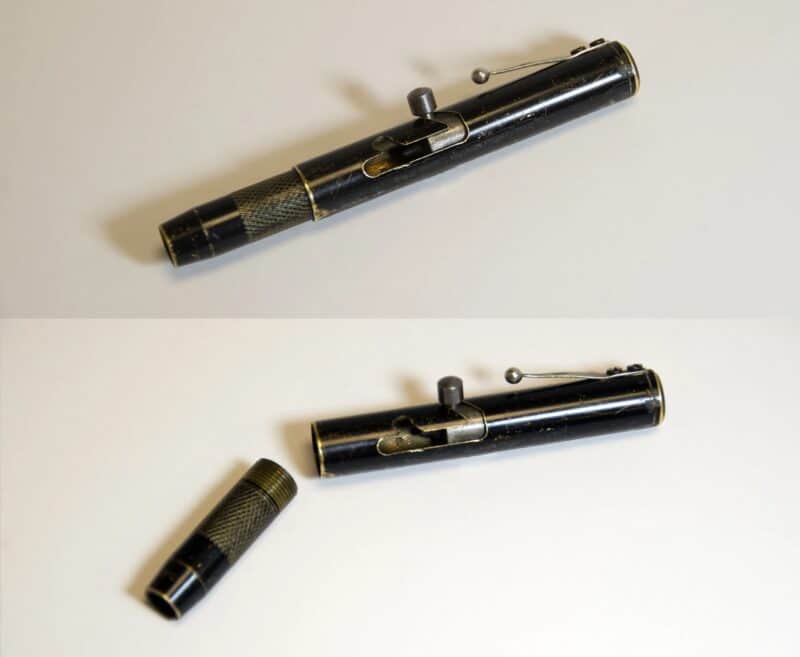
“Any other weapon” (AOW) is a broad NFA category and was intended to cover things
that didn’t neatly fall into other categories such as SBR or SBS (short-barreled shotgun).
Things such as this 1924 Pen Gun in .38 Short Colt from the FBI are one example. The definition
also includes cane guns, wallet guns, knife guns and almost anything else a creative shooting
mind can imagine! Photo: FBI.gov
For decades, the basic procedure was straightforward and often painfully slow. A prospective owner submitted an application to the ATF, paid the applicable NFA tax and waited for the federal government to approve and register the firearm. For a suppressor or other NFA firearm being transferred to an individual, this meant a Form 4. The $200 tax became so ingrained in the process that it was simply the cost of doing business in this area.
Then, things changed last year.
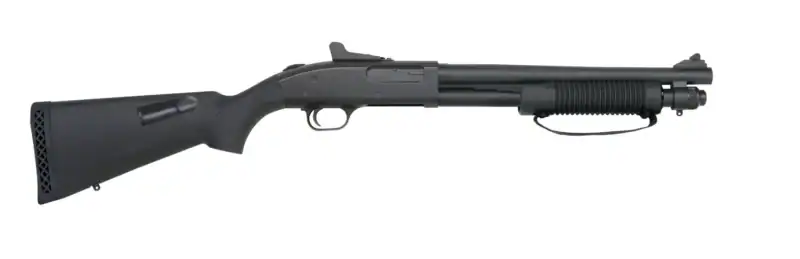
Short-barreled shotguns (SBS) were one of the categories covered by the decision.
One production example is this Mossberg 590A1 6+1 with a 14” barrel. Photo: Mossberg
Tax Goes Away
Showing a rare follow-through on promises, Congress changed the NFA tax structure in the One Big Beautiful Bill Act, and President Donald Trump signed it into law on July 4, 2025. The Act reduced the making and transfer tax to zero for suppressors, short-barreled rifles, short-barreled shotguns and other NFA firearms subject to the tax. The $5 tax applied to AOW transfers was also eliminated. The $200 tax for machine guns and destructive devices remained.
In practical terms, the $200 tax disappeared for the NFA items most commonly purchased by gun owners, such as suppressors — but the registration requirement did not.
This created an interesting constitutional question. The NFA was built around Congress’ taxing power. The Supreme Court had previously upheld the NFA’s taxation mechanism, and the registration requirements were part of that overall statutory structure. But what happens when Congress eliminates the tax altogether but leaves the regulatory machinery in place?
If there is no tax to collect, then what is the constitutional justification for continuing to use that taxing statute to require registration and federal approval? This question became the foundation of the litigation that produced last week’s decision.
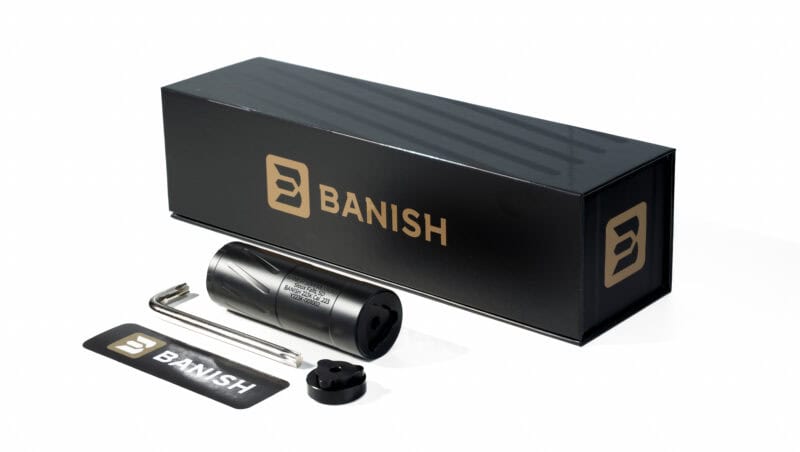
On Aug. 13, 2026, Gun Owners of America member and popular YouTube influencer Brandon Herrera
and Texas Rep. Wes Virdell received a suppressor from Silencer Shop in Leander, Texas,
without submitting a Form 4. Assuming the current ruling stands legal challenge, suppressors
are likely to become even more popular. Photo: BANISH Suppressors
Gun rights organizations and firearms businesses moved quickly after Congress eliminated the tax. Among the plaintiffs were Gun Owners of America, Gun Owners Foundation, Silencer Shop Foundation, Palmetto State Armory, SilencerCo Weapons Research, B&T USA and the Firearms Regulatory Accountability Coalition. Fifteen states, including Indiana, also became plaintiffs. A separate case, Jensen v. ATF, involved additional gun-rights organizations and individuals. The cases were then consolidated.
The plaintiffs’ argument was relatively simple: Congress had eliminated the NFA tax for certain firearms while leaving the registration and approval requirements intact. If those requirements were tied to Congress’ taxing authority, the government could no longer enforce them once the tax had been reduced to zero.
Judge James Wesley Hendrix of the U.S. District Court for the Northern District of Texas ultimately agreed with the plaintiffs on the central constitutional issue.
Which brings us to the part that many headlines have badly mangled.
The Decision
Judge Hendrix did not declare the National Firearms Act unconstitutional in its entirety.
• He did not repeal the NFA.
• He did not order ATF to destroy the federal NFA registry.
• He did not declare every NFA firearm in America immediately legal and unregulated.
Instead, the court held the NFA’s registration and approval requirements could not constitutionally be enforced against the covered parties when applied to firearms for which Congress had eliminated the NFA tax.
In this case, “covered parties” certainly does not mean every gun owner in America or even every gun owner in a state that joined the lawsuit. The injunction applies to the plaintiffs in the case and, depending on the particular plaintiff, certain members, customers and affiliated parties. These distinctions are important because the court specifically declined to issue a nationwide injunction. In other words, the ruling may provide a path for some gun owners to acquire NFA firearms without registration, but you can’t simply assume that being an American gun owner makes you a beneficiary of the court’s order.
The decision affects the NFA categories for which Congress reduced the tax to zero: suppressors, short-barreled rifles, short-barreled shotguns and AOWs, although the treatment of AOWs is more complicated because of the standing and plaintiff differences between the consolidated cases.
Machine guns and destructive devices are different. Congress retained the $200 NFA tax on those categories, so they do not fit within the constitutional reasoning that produced the decision. Federal law also prohibits the possession of machine guns manufactured after May 19, 1986, subject to statutory exceptions. Nothing in the NFA ruling eliminates this separate prohibition.
So, if anyone tells you this decision means machine guns are suddenly back on the menu, they’re clearly mistaken — or trying very hard to sell you something.
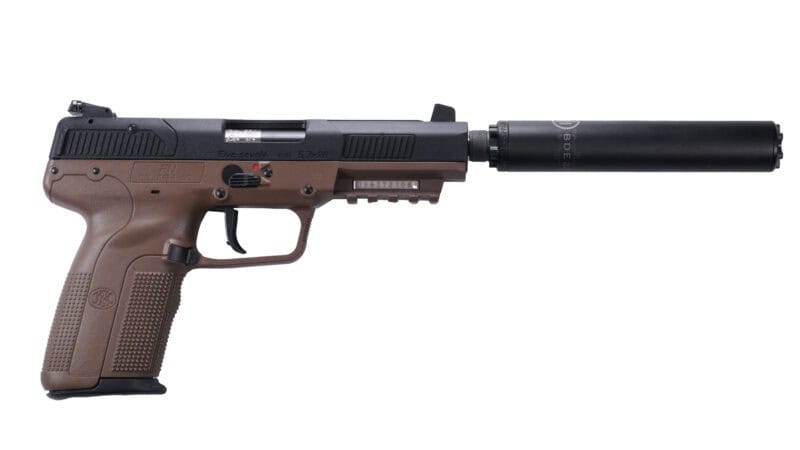
Since the NFA was enacted in 1934, gun-control advocates have portrayed machine guns,
suppressors, short-barreled rifles and shotguns as the tools of criminals. With the NFA now
under renewed legal scrutiny, expect that familiar argument to resurface, aided by Hollywood's
long-standing stereotypes of these firearms. Shown is the FN Sive-seveN with PWS BDE-22 suppressor.
Photo: PWS
What It Means
For gun owners, the practical question is whether they fall within one of those protected classes. The relief is directed at the plaintiffs and the classes of people and entities specifically covered by the judgment, including members of the listed organizations and customers where the judgment provides for that relationship. But, before relying on the decision, you need to determine whether you actually fall within one of those groups. That might require a call (probably involving “billable hours”) to your favorite Second Amendment lawyer.
The result of this ruling would have been unthinkable a short time ago: suppressor transfers taking place without the traditional Form 4 process. Those transfers are not merely theoretical — Gun Owners of America and Silencer Shop publicly announced the first suppressor transfers without the traditional NFA registration process.
Just after midnight on August 13, 2026, popular YouTube shooting influencer Brandon Herrera and Texas Rep. Wes Virdell became the first to receive suppressors without traditional NFA registration, Form 4s, or ATF approval. Under the ruling, covered buyers in qualifying states purchase suppressors like conventional firearms — completing an ATF Form 4473 and a standard NICS background check rather than submitting fingerprints or photos and waiting for federal approval. Crucially, the injunction didn’t just waive the already-$0 tax; it removed federal NFA registration requirements entirely for covered transactions.
State Laws
There is another significant piece of this story that has received surprisingly little attention: the court was dealing with federal law. This decision does not repeal any state (or local) firearms laws.
States impose restrictions on firearms even when federal law does not. Some states have their own prohibitions, registration requirements or other restrictions involving suppressors, SBRs, SBSs and other NFA firearms. Those laws exist independently of the federal NFA.
According to Silencer Central’s current analysis, 27 U.S. states are effectively “free states” under the new federal landscape, meaning a gun owner who falls within the court’s protected class can potentially purchase a suppressor without going through the old Form 4 process. Another 15 states have some state-law restriction or other legal issue that would have to be addressed before the federal ruling could be put into practice, while eight states — California, Delaware, Hawaii, Illinois, Massachusetts, New Jersey, New York and Rhode Island — prohibit civilian suppressor ownership altogether. The federal court ruling did not invalidate any of those state laws, so those states will require their own legislative or judicial changes before the federal decision can have the same practical effect.
For the gun owner, all this means there are potentially two separate questions to answer. First, does federal law permit me to possess this firearm under the court’s ruling and injunction? Second, does my state (or sometimes even local) law permit me to possess it?
Other federal firearms laws may still apply. The injunction concerns specific NFA provisions; it isn’t a blanket exemption from every federal firearms statute that might apply to a particular firearm or transaction. This is another reason the “The NFA is dead” headline is not merely an exaggeration — it could lead a gun owner into a very expensive mistake.
Next Steps
The obvious question is “Where does it go from here?”
The Justice Department can appeal the decision to the Fifth Circuit Court of Appeals. The Trump administration allowed the judge’s initial seven-day stay to expire without obtaining a stay to prevent the injunction from taking effect, but that doesn’t necessarily mean the litigation is over.
However, other NFA challenges are also moving through the federal courts, and the real endgame may not be the Fifth Circuit. If another federal appeals court reaches a conflicting conclusion, the resulting circuit split could present exactly the kind of issue the U.S. Supreme Court routinely considers when deciding whether to grant review.
None of this is intended to minimize the importance of the decision; quite the opposite.
For nearly a century, the federal government has required Americans to register certain firearms and obtain government permission before taking possession of them. Judge Hendrix has now held Congress cannot continue enforcing those requirements against the covered parties for firearms on which Congress itself eliminated the underlying NFA tax. That is a remarkable development.
Whether this decision survives an appeal, expands to more gun owners or ultimately reaches the Supreme Court remains to be seen.
For now, however, the smart approach is neither to dismiss the decision nor to overstate it. If you believe you may be covered by the injunction, determine exactly what the order covers, whether you qualify for its protection and what other federal, state and potentially local laws apply to the item you want to possess.
This ruling is a great step for gun owners and potentially the beginning of the end for the burdensome aspects of the NFA, but we aren’t at the finish line yet. The NFA isn’t dead — but it IS in serious trouble, and that’s the much more interesting story.
DISCLAIMER: I am not an attorney, and this article is not legal advice. It is my interpretation of a complicated and rapidly developing court decision, intended to help gun owners understand what actually happened rather than rely on the increasingly breathless headlines surrounding it. Anyone considering acquiring or possessing an NFA-regulated firearm under the new legal circumstances should consult a qualified attorney familiar with federal and applicable state or local firearms law.’
Get The Dealer Advantage Every Week!
By submitting this form, you are consenting to receive marketing emails from: . You can revoke your consent to receive emails at any time by using the SafeUnsubscribe® link, found at the bottom of every email. Emails are serviced by Constant Contact