The Transfer Call That Rings While You’re Behind the Counter
What a missed call costs a firearms dealer
How do you prioritize during busy season?
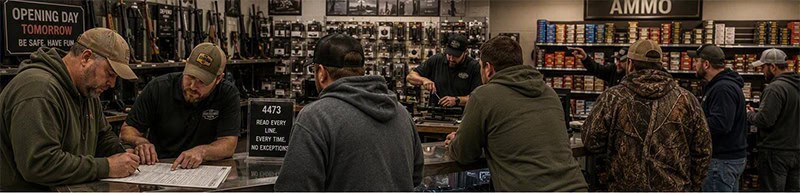
It’s the Saturday before opening day, and the counter is three deep.
There’s a customer halfway through a 4473 with you reading every line over his shoulder, because that form is the one piece of paper in the building you never rush. Your bench guy is elbow-deep in a scope mount. Somebody by the ammo wall wants to know whether you’ve got any more of the 6.5 Creedmoor that was on the shelf last week. And the phone behind the register has been ringing for the better part of a minute.
Nobody’s going to get to it. Everybody who could is doing something that matters more.
I should say up front that I’ve never worked a gun counter. I build AI phone agents for small businesses, which comes up later in this piece, and you should read that section knowing I have a stake in it. I’ve spent a lot of time in other people’s call logs, though, and firearms retail has a version of the missed-call problem I haven’t seen anywhere else. The busiest hour on the phone is almost always the busiest hour at the counter, and the counter is where the law says your attention belongs.
What’s on the other end of the line
The calls that ring during that Saturday rush aren’t all the same, and it’s worth being honest about which ones you’re losing.
The transfer inquiry is someone who bought a firearm online and needs a dealer to receive it. They’re usually calling two or three shops straight off a search, and the first one that answers gets the transfer. The fee is the small part. The bigger part is that a transfer customer walks into your store, and a customer who walks in once tends to come back for ammunition, optics, cleaning gear and range time for years.
The stock check is quicker and just as real. “Do you have this?” is a buying question, and the caller who doesn’t get an answer drives to the store that gave one.

How are you treating first time customers who call before visiting your store?
The first-time buyer is the call I’d least want to miss. Someone who has never owned a firearm is choosing a shop before they choose a gun, and they’re choosing partly on how they were treated the first time they called.
Then there’s the call that isn’t a sales call at all: a question about what’s legal, what’s required, or what someone can and can’t do in their situation. That call belongs to the licensed dealer, and it should never be answered by anybody guessing. More on that below.
A softer year makes every call count
The NSSF-adjusted background check figure for 2025 came in at 14,612,314, down 4.1 percent from 2024. Black Friday 2025 saw 165,183 NICS checks in a single day and 530,156 for the week around it, down 13.6 percent from the same week a year earlier. Background checks aren’t sales, and NSSF says so plainly. What the numbers do tell you is that the rush is still the rush, and in a softer market the store that answers the phone is taking business from the stores that don’t.
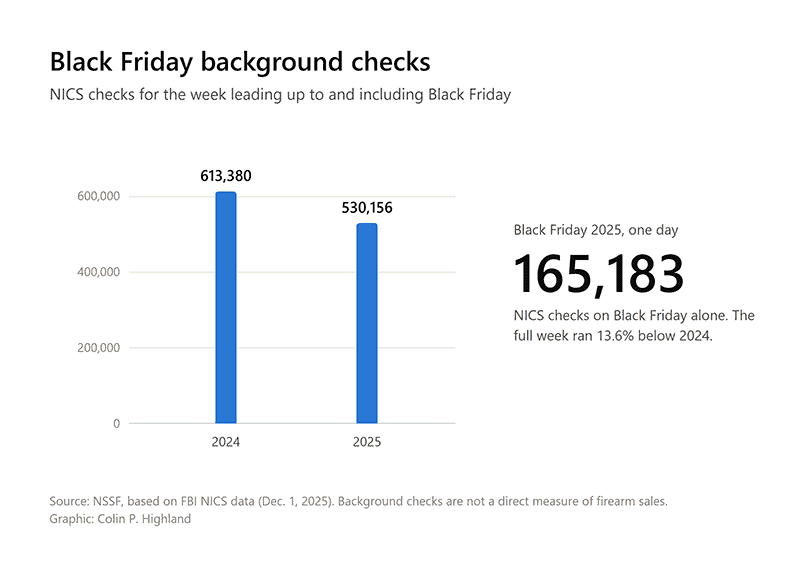
In a down year the store that answers the phone is taking business from the stores that don’t. Graphic by Colin P. Highland.
Check the call log against the bound book
You keep better records than almost any small business I can think of, which makes this easier for you than for most. Pull last month’s inbound call log from your carrier or phone system. Sort it by hour, and count what was answered live, what went to voicemail and what hung up. Then set it next to two records you already keep for other reasons: your bound book and your special-order list. The numbers that called and never turned up in either one are the calls that went somewhere else.
My guess is you’ll find the misses bunched exactly where you’d expect, on Saturdays and in the hour after work lets out, with more transfer inquiries in the hang-up column than you’d like. You won’t be able to prove every one of them went to another shop. You’ll still have a number you can stand behind.
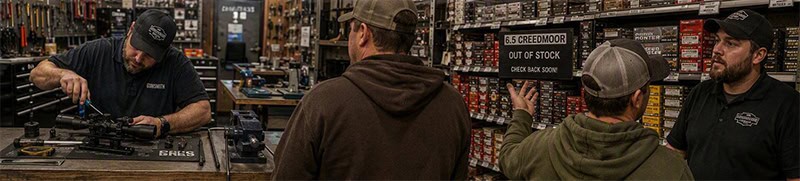
Your store traffic always comes first, but there are still ways to convert callers to customers.
Who picks up
Cross-training the whole counter to answer is free and it helps, as long as everybody knows which calls they can handle and which go to the licensed dealer. It works right up until the whole counter is busy, which is the exact hour you needed it.
A dedicated phone shift during peak hours is the best version of the human answer. One person whose only job on a Saturday is the phone will book transfers and answer stock questions all day. It’s also a paycheck, and on a slow Tuesday it’s a paycheck spent watching a quiet phone.
Voicemail with a same-day callback rule is cheap and better than people give it credit for, but only if the callback really happens that day. A transfer customer who gets called back tomorrow has usually already had the seller ship to someone else.
Putting the routine answers on your website, with current hours and a transfer request form, takes a lot of simple calls off the phone before they’re ever made. It does nothing for the caller who’s already dialing.
AI answering is the newest option and the one I sell, so weigh this part knowing that. It’s good at the routine call: hours, whether you do transfers and how the process works, taking down a transfer request with the caller’s name and the seller’s details, or passing a stock question to your team. What it must never do is answer a legal or compliance question. Anything about what’s legal, what’s required, who’s eligible or someone’s particular situation goes to the licensed dealer, every time, and a system that can’t recognize that call and hand it off shouldn’t be on your line. The same goes for trade-in values and anyone who’s upset. It should also tell every caller up front that they’re talking to an automated assistant.
The setup I’d recommend keeps your people first. Let the phone ring the counter, and have the agent pick up only when nobody gets to it. Your regulars still reach the voices they know, and the transfer inquiry that rings in the middle of the Saturday rush gets answered anyway. If you run a one-counter shop where the phone rings a dozen times a day and you get to every one of them, you don’t need what I build.
The counter comes first
None of this changes the order of things. The customer standing in front of you, and the paperwork that comes with him, gets your full attention. The phone just needs a plan for the minutes when that’s where you are.
Pull last month’s log before the season starts. Opening day and Black Friday are coming either way.
Colin P. Highland is co-founder of Workforce Wave, a Charleston, South Carolina company that builds AI phone agents for small and mid-sized businesses, including the kind of automated answering described in this article. He can be reached at colin@workforcewave.com or through workforcewave.com.
Get The Dealer Advantage Every Week!
By submitting this form, you are consenting to receive marketing emails from: . You can revoke your consent to receive emails at any time by using the SafeUnsubscribe® link, found at the bottom of every email. Emails are serviced by Constant Contact