How To Ensure Comfort And Safety At Your Outdoor Shooting Range — No Matter The Season
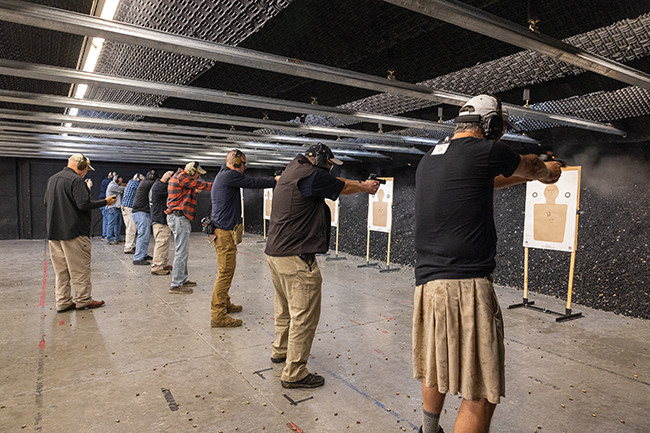
One of the three pristine indoor ranges at Royal Range.
Shooting ranges typically welcome enthusiasts year-round—whether for skills refinement or for simple enjoyment. Driving regular business from one season to the next is ideal, although the shifts in weather and temperatures create some challenges. These challenges are most acute for outdoor ranges, where it can be a struggle to keep guests comfortable so they can maintain a focus on safety and have an enjoyable range experience.
When selecting heating options for an outdoor range, there are a number of factors to consider beyond comfort, such as energy efficiency and overall safety. Thankfully, there are plenty of options to keep an open-air range hospitable, even when temperatures drop.
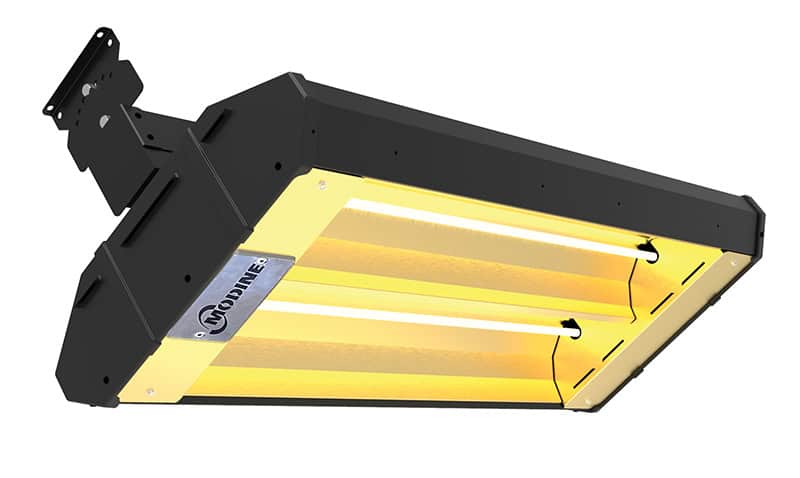
The MEL Series from Modine is a high wattage, commercial-grade electric heater offering.
A great choice for spot heating and outdoor ranges.
Image courtesy Modine.
Choosing The Right Kind Of Heater
While an indoor range can benefit from central heating, outdoor facilities will have to choose alternative methods—including solutions that can keep customers toasty with minimal heat loss or inefficiency.
One of the most popular options for outdoor ranges is infrared heating. Infrared heaters work by heating patrons directly, as opposed to heating the air—making them well-suited for open air spaces. Infrared heaters can be mounted near waiting areas, along walkways or above stalls, where strategic placement can ensure that customers are kept warm while they shoot, wait or mingle. Both electric and gas-powered heaters are available, depending on the specific needs of the facility.
At some shooting ranges, propane patio heaters may be an option. While these heaters can provide ambient warmth, they are not as efficient as infrared heaters—and to ensure everyone’s safety, it’s critical to position them far away from any flammable or combustible materials.
One final option to consider is installing heated seats or mats, which can provide an extra level of comfort for guests who are waiting their turn or simply watching a loved one. A benefit here is that heated benches or mats do not interfere with the shooting environment in any way; they are a discreet, unobtrusive way to promote the comfort and wellbeing of guests.
Designing The Optimal Space
While selecting and installing the right heaters is an important step toward all-weather hospitality, there are some other considerations that can have a major impact on the guest experience—and on how optimally those chosen heaters function.
For example, even the most robust heating units will be ill-equipped to warm customers when biting winds blow through. Strategically placed wind barriers can protect patrons from cruel gusts while also ensuring the space retains as much heat as possible. Screens and walls can be erected as wind barriers, but there may also be natural elements, including trees, that can be put to good use. A little resourcefulness can go a long way.
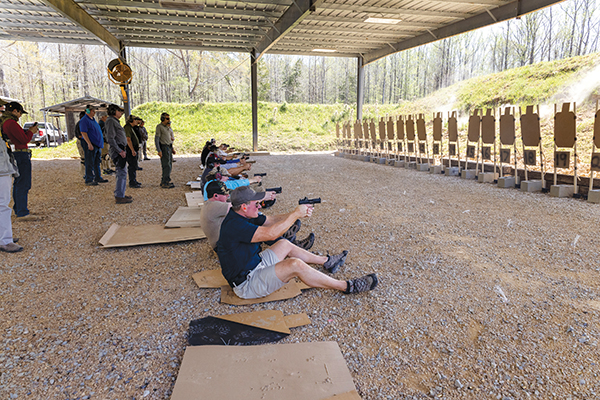
For shooting bays, creating a partial enclosure may be prudent—trapping heat, keeping customers comfortable and saving heating units from inefficient performance. Also note that the addition of some roofing can provide shelter from temporary storms or seasonal drizzles.
The placement of heating units should be strategic, focused on areas where customers congregate or stand. A zoned approach to heating units may be wise; while heating a vast outdoor space can be challenging to nearly impossible, targeting heavy-traffic zones can be much more effective.
Keeping Safety In Mind
While guest comfort is paramount, it can never come at the expense of guest safety—a concern at any business, but one of immediate urgency one at shooting ranges.
The most important safety consideration is to keep heating units away from areas where ammunition or other flammable materials are stored.
There are also some important considerations pertaining to heating unit setup and maintenance. For instance, ventilation can be a major concern for any heaters that run on propane or other fuels. It’s crucial to prevent the buildup of any kind of fumes, something that can happen even in outdoor spaces—especially if the fumes become trapped within a partial enclosure.
Additionally, ensuring routine maintenance and consistent upkeep promotes the longevity of heating units—while also providing a way to identify potential safety concerns and to address them before they become larger problems.
Designing A Range For Year-Round Use
Shooting ranges have the potential to be consistently popular from one season to the next—but for ranges that are open air, it’s important to pursue layout and design in a way that puts guest comfort first, starting with the installation of a reliable heating unit or two.
Visit Modine for a variety of indoor and outdoor heating options.