Trigger Tech
Navigating the Crosshairs of AI
In Gun Shops — Embrace or Resist?
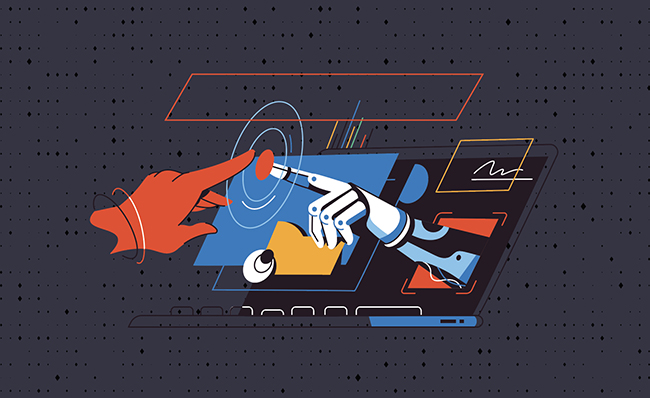
Image: Kit8 d.o.o. / Adobe Stock
From “The Terminator” and “Westworld” to the Stanley Kubrick classic “2001: A Space Odyssey,” there’s no shortage of movies, books and television shows warning us against the dangers of artificial intelligence (AI). So it makes sense why the seemingly sudden boom in AI we saw last year left us scrambling to try and close Pandora’s box — particularly those in the shooting industry who historically have fallen in the “late majority” or even “laggard” categories of the technology adoption curve. But the reality is many of us have been using AI for years, whether we’ve realized it or not.
In today’s fast-paced business world, independently owned firearms dealers and shooting ranges need every advantage they can get to not only survive, but thrive. Artificial intelligence offers innovative ways to streamline operations, improve customer experiences and ultimately drive growth. Here are just a few ways AI can help increase your business’s efficiency and profitability.
Automating Tedious Tasks
A recent survey by Monday.com, a cloud-based project management software provider, revealed nearly 55% of workers spend five or more hours each week on mundane and repetitive tasks that demand little creativity. When you own or manage a small business — which requires wearing multiple hats — these tasks can significantly slow down operations and productivity.
AI-powered tools like Zapier, Asana and ClickUp can automate tasks such as calendar entries, meeting scheduling, document routing and data transfers. This not only frees up valuable time, it also ensures these tasks are executed with precision.
“There are certainly valid cyber security concerns to consider,” said Justin Morrissey, director of social media for NSSF. “At NSSF, we don’t use AI in a way that first comes to mind for many people, like to write content, but we do utilize various automation features, which are built into our existing software programs. In order to be more efficient, you need to optimize your processes and cut out as many tedious tasks as possible.”
Morrissey provided several real-world examples of AI applications that can be helpful to those working within the firearms industry. Tools like Trello have created frameworks to help teams manage work efficiently, ensuring tasks are tracked and completed seamlessly.
Sweepstakes programs can automatically promote additional entries on social media, eliminating the need for manual posting. Moreover, Zapier streamlines information flow between programs, making it easier to handle sales, customer inquiries and more.
What tasks can you automate or eliminate? For the next week, take inventory of every single mundane and/or repetitive task you complete and go from there.
Enhancing Customer Engagement
AI can also be a valuable tool for understanding and engaging your customers better. By leveraging AI-driven analytics tools, features often included in a CRM system, you can predict customer preferences and uncover trends in buying behavior. This data-driven approach enables a business to create more targeted ads and discounts, enhancing marketing efforts and customer satisfaction.
Morrissey emphasizes AI can help businesses make more informed decisions, leading to real, authentic interactions with customers.
“You need to know what matters most to your business and your customer so they have the most simple, streamlined experience,” he said.
“Just be sure you’re safeguarding your voice,” Morrissey advised. “We want to make real, authentic human decisions that represent who we are as a business and as an industry.”
Maintaining an authentic voice is vital in the firearms industry, where trust and credibility are paramount. Rightfully so, business owners worry AI may dilute the authenticity of their brand, making it apparent they’re not personally engaged with customers or content creation.
Rather than relying on AI tools to write customer-facing content, like a blog post for your website or utilizing a chatbot to field website questions or social media messages, Morrissey suggests instead using it to help with behind-the-scenes tasks — like SEO, where a computer is the audience.
“You can’t expect a chatbot to reply in a way that really answers a customer’s questions,” he noted.
View It As An Enhancer, Not A Substitute
Ultimately, the role of AI should be as an enhancer of human capabilities rather than a substitute.
While stigma and concerns surrounding AI adoption are understandable, it is crucial for firearms business owners to recognize the potential for growth and efficiency AI offers.
“It’s okay to be conservative and be smart about it, but the worst thing you can do is ignore it,” observed Morrissey. “With all the challenges businesses face in today’s climate, it’s not realistic for ranges and retailers to think they can continue to do things the way they’ve always done them.”
Those interested in learning more about the practical applications of AI are encouraged to attend the beginner-friendly SHOT University presentation titled “A Practical Guide to Using ChatGPT to Make Life Easier & Business Better” on Wednesday, Jan. 24, at SHOT Show 2024.
Bravo Store Systems, the first all-in-one software provider for specialty retailers including gun stores, will share how its employees use ChatGPT in their daily work, with practical examples and success stories. The presentation will include live ChatGPT demonstrations and actionable strategies on how to integrate AI into customer interactions, inventory management and marketing efforts to improve your gun store or range’s operational efficiency and growth. To register, visit shotshow.org/shot-university.
Here in the new year, it’s the perfect time to consider fresh ways of doing business. Whether or not AI is “the answer” is up to you — but, as you can see above, it’s certainly worth a look.